


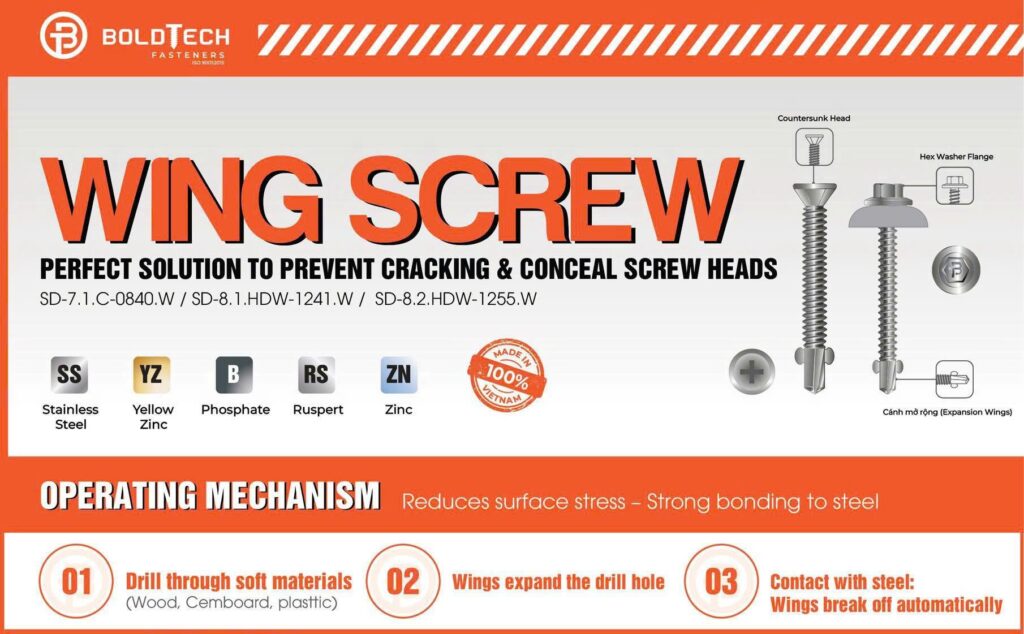
In applications involving cement board, wood, and polycarbonate sheets, one of the biggest challenges is material cracking and surface deformation during fastening.
To solve this, self-drilling screws are engineered with a “wing” design – a small feature with significant technical impact.
Top 2 Wing Designs on Self-Drilling Screws
🔧 How the wing design works
The wings are located near the drill tip and function as follows:
- When drilling through soft materials (wood, cement board, plastic):
→ Wings enlarge the hole beyond the screw diameter - When reaching steel:
→ Wings break off, allowing the drill point to penetrate steel
👉 Result:
- Upper layer is stress-relieved
- Base structure remains securely fastened
With this operating mechanism, Self-Drilling Screws with wing design effectively process the upper material while ensuring a strong fastening connection to the steel structure below.
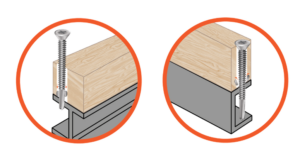
⭐ Supports countersunk finishing (hidden screw head)
An often overlooked benefit:
👉 The enlarged hole created by the wings allows:
- The screw head to sit below the surface
- When combined with a countersunk head design
→ results in a smooth and flush finish
✔️ Especially important for:
- Cement board flooring
- Wood panels
- Interior finishing applications
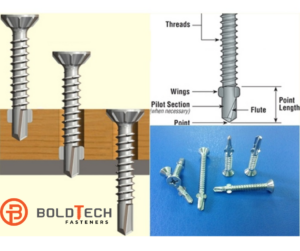
✅ Core benefits of the wing design
-
Stress reduction – prevents cracking
Larger hole reduces pressure during fastening → minimizes cracking in boards and plastics.
-
Thermal expansion allowance (polycarbonate)
Allows movement due to temperature changes → prevents long-term cracking.
-
Improved fastening accuracy
Ensures proper thread engagement into steel → stronger connection.
-
Faster installation
No pre-drilling required → fewer steps → higher efficiency.
⚠️ Without wing design
- Smaller hole → higher stress
- Increased risk of cracking
- Screw head remains protruding
- Poor surface finish
The wing design is more than a drilling aid – it delivers both structural and finishing benefits:
✔️ Reduces material stress
✔️ Enables thermal expansion
✔️ Supports countersunk (flush) finishing
✔️ Enhances overall construction quality
👉 A critical solution for modern cemboard, wood, and polycarbonate systems.
This makes it an important fastening solution for Cemboard, wood, and polycarbonate applications.
Contact BoldTech Fasteners

Looking for the right fastening solution or want to learn more about our range of high-quality screws, Self-Drilling Screws, and fastening accessories?
The BoldTech Fasteners team is always ready to support you with reliable fastening solutions for both residential and industrial construction projects.
Connect with BoldTech Fasteners
- Facebook: BoldTech Fasteners
- YouTube: BoldTech Fasteners
- Email: info@boldtechfasteners.com
- Hotline: +84 966 666 056
At BoldTech Fasteners, we are committed to delivering high-quality fastening solutions that meet technical standards while enhancing the durability and aesthetic value of every project.
Contact BoldTech Fasteners today for professional product recommendations, technical support, and the latest updates on fastening solutions and construction fastening technologies.